Meet the Masters: Briton Rivière – The Man Who Painted a Dog's Love
 Kerri Dixon

Discover how Briton Rivière captured emotion and loyalty in his animal paintings, and what wildlife artists can learn from his sketches and techniques.
Meet the Masters: Briton Rivière – The Man Who Painted a Dog's Love
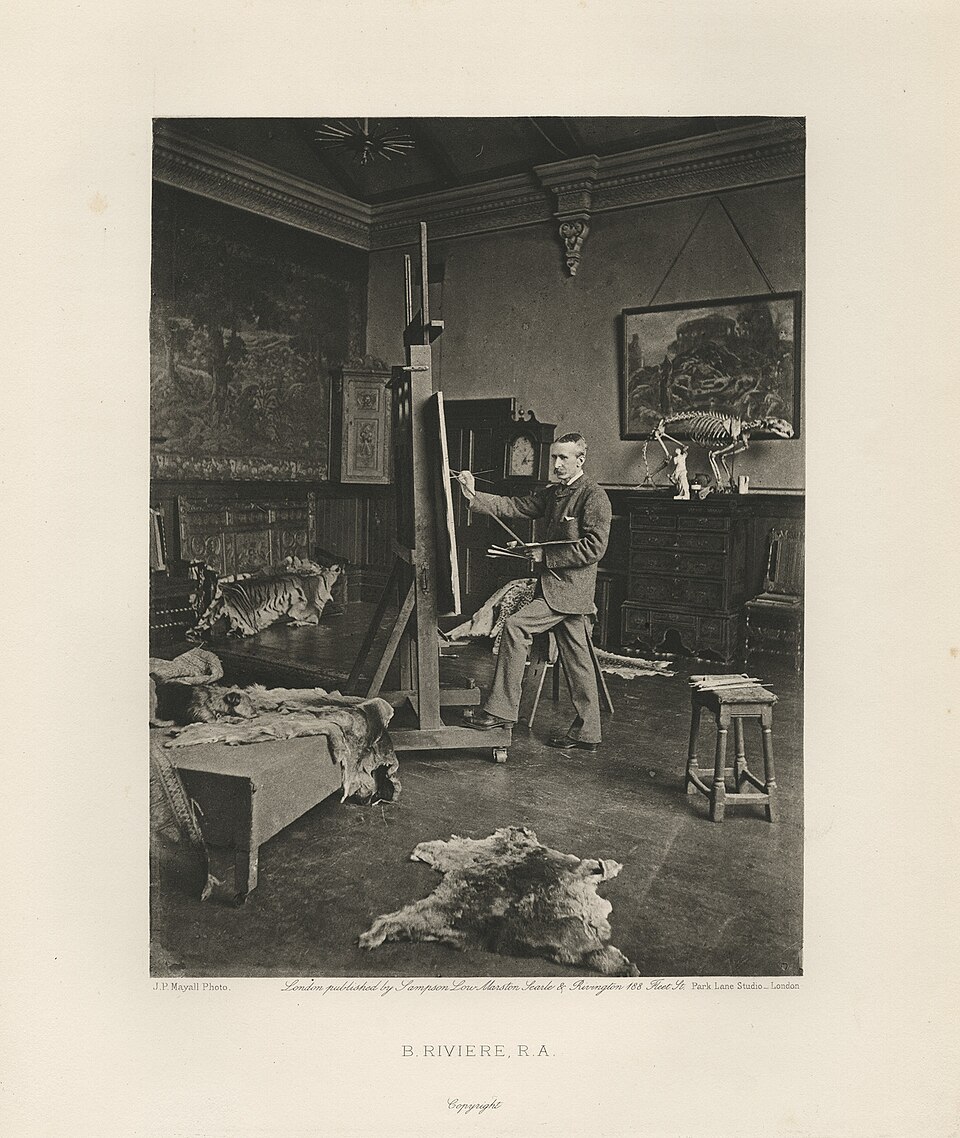
How a Victorian animal painter captured the extraordinary loyalty, personality and emotion of animals — and what we can learn from his remarkable approach to art.
There are some paintings that stop you in your tracks. Not necessarily because of their incredible detail or technical brilliance, but because they make you feel something.
That's exactly what happened when I discovered the work of British artist Briton Rivière (1840–1920).
Now, anyone who knows me knows how much I love animals, particularly dogs. And what immediately attracted me to Rivière's paintings wasn't simply how beautifully he painted them. It was the way he captured their personalities, their loyalty and that extraordinary connection they have with us humans.
His dogs don't just look realistic. They feel alive.
And the more I researched this remarkable artist, the more fascinated I became with how he worked.
From spending hours observing lions at the zoo to bringing dogs, horses and even pigs into his studio, Rivière went to extraordinary lengths to understand the animals he painted.
But perhaps the most interesting discovery was that his realism wasn't just about getting the anatomy right.
It was about using that understanding to tell a story.
A Painting Called Sympathy
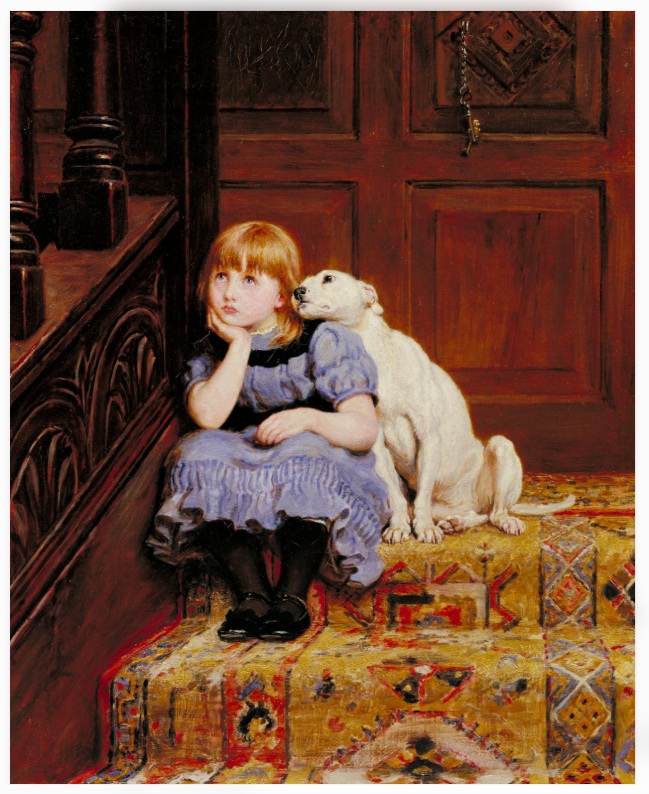
One of Rivière's most touching paintings is Sympathy, completed in 1877.
It depicts a young girl sitting rather miserably on a staircase, with her dog beside her, apparently offering comfort.
The girl is believed to have been modelled on Rivière's daughter Mary, and the painting is often interpreted as showing a child who has been punished for misbehaving.
But it's the dog that really captures my attention.
There's something so familiar about the way it sits close to the girl, quietly sharing the moment.
Anyone who has owned a dog will recognise that behaviour. They seem to know when something isn't quite right, don't they? Sometimes they simply come and sit beside you, as though their presence alone might make things better.
And that's exactly the feeling Rivière captures.
What's particularly clever is that he doesn't need to exaggerate the dog's expression or make it appear human.
Instead, he uses its natural posture, the direction of its attention and its closeness to the child to tell the story.
The girl's withdrawn body language, the dog's position and the surrounding staircase all work together.
The emotion isn't just in the dog's eyes. It's in the entire composition.
And that's a wonderful lesson for anyone who paints animals.
Sometimes we're so busy concentrating on painting the perfect eye or every individual strand of fur that we forget to think about the bigger picture.
What are we actually trying to communicate?
The Extraordinary Patience Behind His Paintings
While researching Rivière, I came across a fascinating interview published in The Strand Magazine in 1896.
And I have to say, I think I would have really liked this fellow!
He seemed to have a wonderful affection for animals and an extraordinary amount of patience when it came to studying them.
He regularly visited the zoo, particularly in the early mornings, to observe lions and other animals.
Rather than simply making one drawing and heading home, he studied them in different positions, observing their anatomy, movement and behaviour.
He also brought animals into his studio.
Dogs, horses and even pigs!
Can you imagine having a pig wandering around your art studio?
Although, living on a farm myself, I suppose that wouldn't be entirely out of the question!
What fascinated me most was how long he was prepared to wait for an animal to naturally adopt the position he wanted.
He understood that you couldn't simply tell a dog to sit in exactly the right pose and expect it to stay there.
He often worked with someone experienced in handling animals, patiently waiting for those fleeting moments that would give him the information he needed.
In another interview, published in Chums in 1897, he discussed how different dog breeds could be particularly restless when he was trying to work from them.
I can just imagine him sitting there with his sketchbook, waiting for a collie to stop moving long enough to capture its pose!
But that patience was clearly part of what made his paintings so convincing.
He wasn't simply copying the appearance of an animal.
He was learning to understand how it worked.
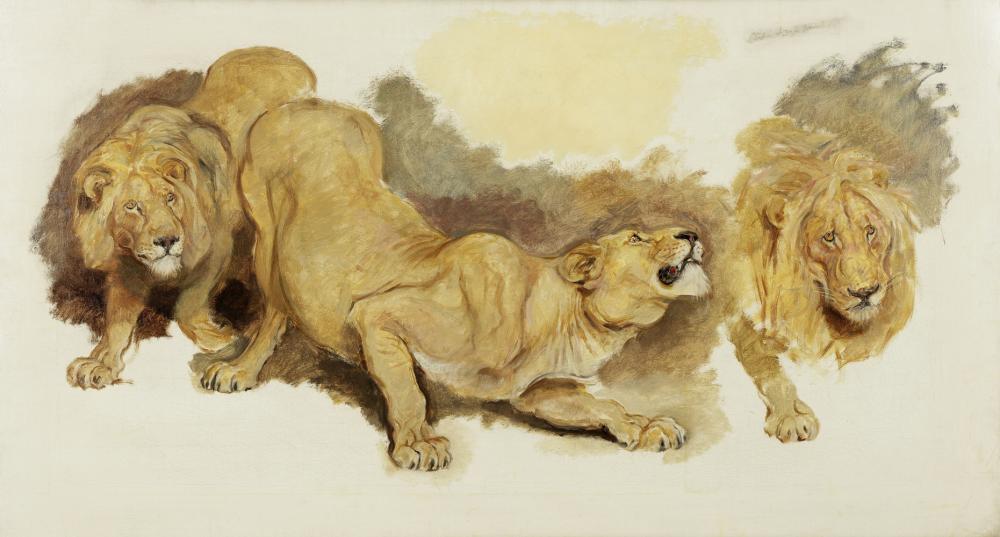
His Preparatory Sketches Tell an Amazing Story
One of my favourite discoveries while researching Rivière was finding a collection of his original preparatory drawings in a 2025 auction catalogue.
And these are fascinating!
We're so accustomed to seeing his beautifully finished oil paintings that it's easy to imagine he must have created equally polished drawings before starting.
But many of his studies are wonderfully loose and expressive.
There are pages of lions in different positions, quick studies of dogs, sketches of puppies and beautiful little drawings of lambs.
Some contain only a handful of marks.
Yet those marks tell us so much.
Studying the Animal Beneath the Fur
Looking at his lion sketches, you can see that Rivière was concentrating on anatomy, proportions, weight and movement.
He wasn't concerned with drawing every individual hair in the mane.
He wanted to understand how the animal's body was constructed.
How did its shoulders move?
How did its head connect to its body?
How did its weight shift when it sat, stood or walked?
These are exactly the sorts of things I encourage my own students to think about.
Because no matter how beautifully you paint the fur, if the underlying structure isn't convincing, the animal won't look quite right.
Realism begins with understanding the larger shapes, values and proportions.
The details come later.
Coloured Chalks on Buff Paper
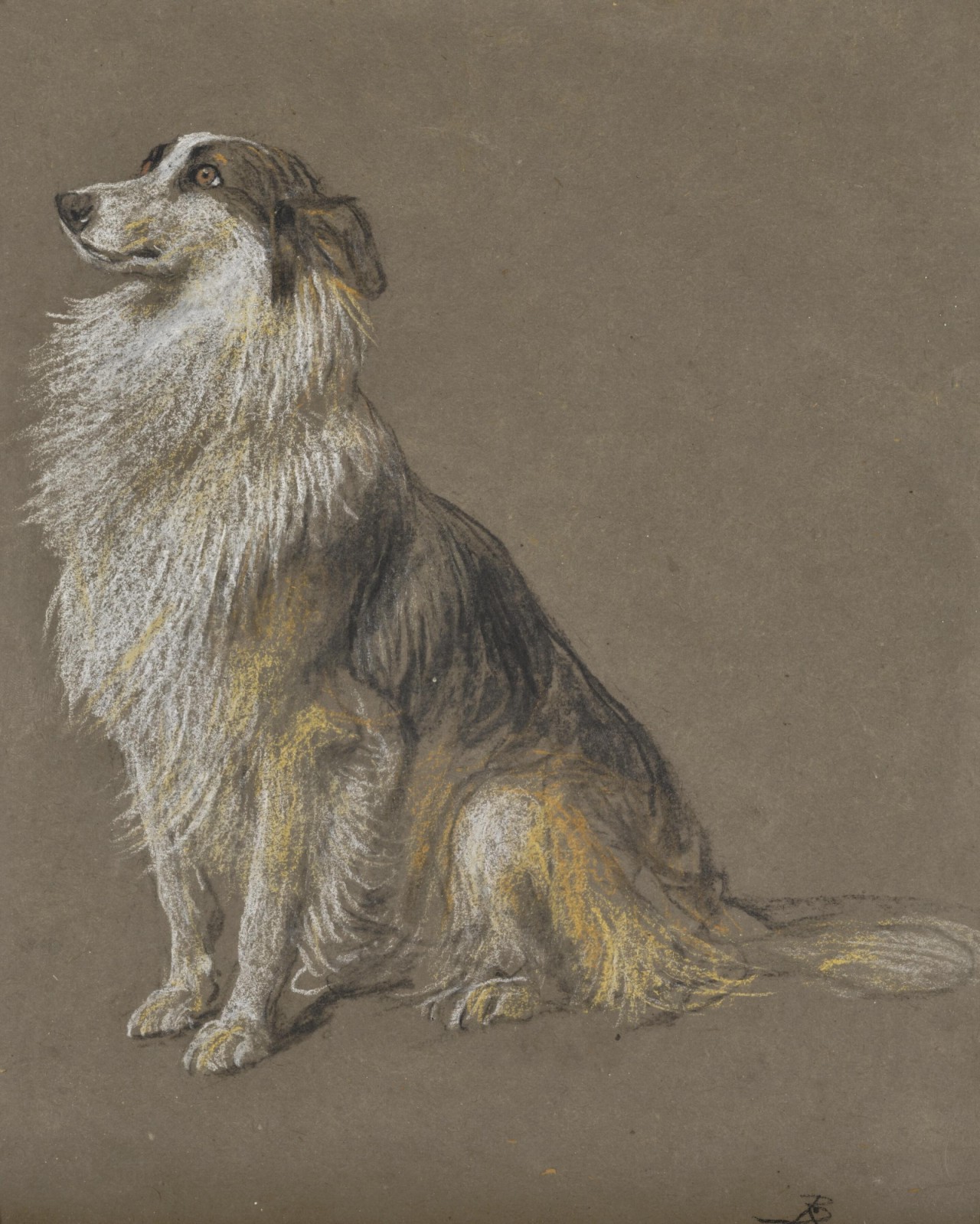
Another lovely discovery was a series of puppy and lamb studies described in the auction catalogue as coloured chalks on buff paper.
Buff paper is a warm beige or tan-coloured paper, and Rivière used that underlying colour as part of his drawings.
Immediately, I thought of the way we work with pastels on coloured Pastelmat.
By using the paper as a middle value, he could add lighter chalks for highlights and darker marks for shadows, allowing the animal's form to emerge without covering the entire surface.
And what I particularly love about these drawings is how economical they are.
He wasn't trying to create a finished masterpiece.
He was observing, experimenting and learning.
It's a wonderful reminder that not every drawing needs to become a finished artwork.
Sometimes the most valuable drawings are the quick, messy little studies that teach us something.
From Observation to Storytelling
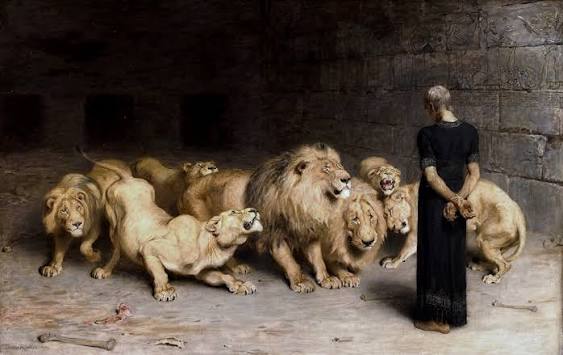
Another fascinating example of Rivière's process can be seen in his studies associated with Daniel in the Lions' Den.
His preparatory work shows just how much attention he gave to understanding the lions before incorporating them into a dramatic narrative painting.
And this brings me to something I find particularly interesting about his work.
Rivière wasn't simply painting portraits of animals.
He was creating stories.
His paintings often explored relationships, loyalty, vulnerability, grief and companionship.
And while his stories might have begun with an imagined scene, he relied on careful observation to make the animals within those scenes believable.
It's that combination of imagination and observation that makes his work so compelling.
He understood the importance of getting the anatomy right, but he also knew that technical accuracy alone wasn't enough.
A painting needed something more.
It needed a reason for us to care.
6adff313469bb_lg.png)
The Loyalty of Dogs
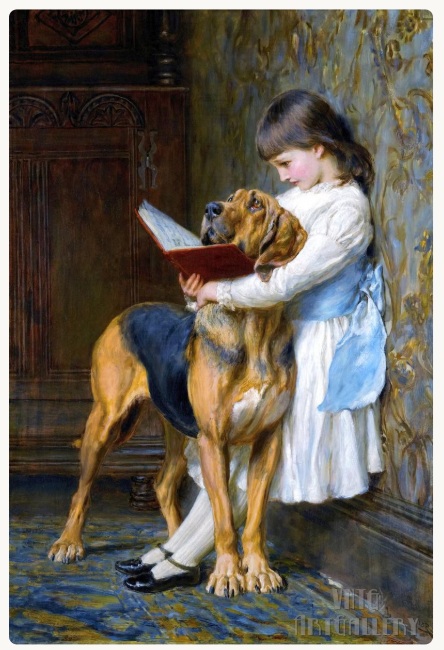
Some of Rivière's most moving paintings explore the extraordinary bond between dogs and their owners.
In Fidelity (1869), a dog remains devoted to its imprisoned master.
In Requiescat (1888), a dog keeps watch beside its deceased owner.
These are emotional subjects, but what I find remarkable is how restrained Rivière's storytelling can be.
He doesn't need to give the dogs exaggerated human expressions.
Their posture, their attention and their relationship to the surrounding scene communicate the emotion.
And I think that's what makes these paintings so powerful.
Dogs have an extraordinary ability to form attachments to people, and those of us who love them recognise their familiar behaviours immediately.
We see loyalty in a dog waiting beside its owner.
We see companionship in a dog resting its head against someone's knee.
We see affection in the way a dog looks towards someone it trusts.
Rivière understood these moments and knew how to translate them into paintings.
He didn't need to make his dogs behave like people. He allowed them to behave like dogs.
And perhaps that's why his paintings still resonate with us today.
What About Photography?
Something else I found myself thinking about while researching Rivière was how different his working methods were from ours today.
We have access to cameras, mobile phones, wildlife documentaries and thousands of reference photographs.
We can freeze an animal in motion, zoom in on the tiniest details and study its anatomy from the comfort of our own studios.
Rivière lived during the development of photography, but the accounts I've read of his working methods place enormous emphasis on direct observation and studies from life.
That doesn't mean photographs are a bad thing.
Far from it!
I rely heavily on reference photographs in my own wildlife artwork, particularly when painting animals that aren't exactly going to sit still for me.
But there's an important difference between simply copying a photograph and really understanding what you're looking at.
A photograph gives us a moment in time.
Observation and anatomical study help us understand the three-dimensional animal behind that moment.
And I think combining those approaches can make our artwork so much stronger.
Even when we're working from a photograph, we can ask ourselves:
- How is the animal's weight distributed?
- What are the underlying shapes and forms?
- Where is the light coming from?
- Which details are important, and which can be simplified?
- What attracted me to this particular subject in the first place?
Those questions help us move beyond copying and begin making artistic decisions.
An Interesting Tip From Rivière's Studio
There was another little piece of advice in his 1896 interview that I particularly enjoyed.
Rivière liked to have several paintings underway at once.
He found that moving between canvases helped prevent him from becoming tired of working on the same painting.
And I think there's a lot of wisdom in that.
Have you ever spent so long working on one drawing that you reach the point where you can't see what's wrong with it anymore?
You keep adding more detail, adjusting little areas and wondering why something still doesn't look right.
Sometimes the best thing you can do is put it aside.
Work on something else.
Then come back with fresh eyes.
It's reassuring to know that even an artist as accomplished as Rivière recognised the value of stepping away from a painting.
Three Lessons We Can Learn From Briton Rivière
After exploring his paintings, sketches and interviews, there are three things that really stand out to me.
1. Learn to Understand Your Subject
Don't just concentrate on what an animal looks like.
Observe how it moves, how its body is constructed and how it behaves.
The more you understand your subject, the more convincing your artwork will become.
2. Think About the Emotion Before the Detail
Ask yourself what attracted you to the subject.
Was it the expression, the pose, the lighting or perhaps the relationship between two animals?
Think about how your composition can communicate that feeling.
A small change in the position of a head or the direction of a gaze can make an enormous difference.
3. Remember That Realism Isn't About Painting Every Hair
Rivière's preparatory sketches demonstrate this beautifully.
With just a few well-placed marks, he could capture the essence of an animal.
His understanding of anatomy, form, values and movement gave him the foundation for his finished paintings.
And that's something worth remembering whenever we find ourselves getting caught up in tiny details.
Final Thoughts — Making Animals Feel Alive
The more I learn about Briton Rivière, the more I admire not only his artistic ability but also his genuine affection for animals.
I love imagining him at the zoo in the early morning, quietly studying lions.
Or sitting in his studio, patiently waiting for a dog to adopt just the right pose.
And I particularly love that, despite all the effort he put into achieving realism, his paintings were about so much more than technical skill.
They were about relationships, loyalty, emotion and the stories animals can tell without saying a word.
For me, that's what makes his artwork so special.
And it's something I think we can all take into our own creative practice.
The next time you choose a reference photograph or begin planning an animal painting, think about what makes that animal special.
Think about the feeling you want to capture.
Because ultimately, the goal isn't simply to paint an animal that looks real. It's to create one that feels alive.
Happy creating!
Kerri
Further Reading
If you'd like to explore Briton Rivière's working methods, these historical interviews and artwork records are fascinating:
- Harry How, “Illustrated Interviews: Mr. Briton Rivière, R.A.” — The Strand Magazine, 1896. Read the illustrated interview.
Image Attribution - By Joseph Parkin Mayall - Department of Image Collections, National Gallery of Art Library, Washington, DCCatalog: https://library.nga.gov/permal..., Public Domain, https://commons.wikimedia.org/...