There's no right way to make art
 Kerri Dixon
What Portrait Artist of the Year taught me about reference photos, grids, pastels and why there really is no right way to make art.
There’s No Right Way to Make Art
I’ve been watching the Australian version of Portrait Artist of the Year lately, and I have to say, I’m fascinated.
Not necessarily by who wins, but by how differently everyone works.
I think I had this preconceived idea of what a portrait artist looked like. In my head, they would have their sitter in front of them, an easel set up, oil paints out, and they would spend the day carefully painting from life.
Turns out… not really!
Of course, some artists do work that way, but what surprised me was how many immediately walked up to their sitter, asked them to move into different poses, took photographs and then went back to their easel and worked from the photos on their phone or iPad.
Then I started noticing grids appearing on canvases and paper. Artists were measuring proportions, making loose squiggles and marks to establish the face, and generally using whatever method worked for them to get that initial drawing down.
And I found myself thinking:
This is exactly what I keep telling my students.
There really is no prize for making art harder than it needs to be.
Taking the photograph is part of making the art
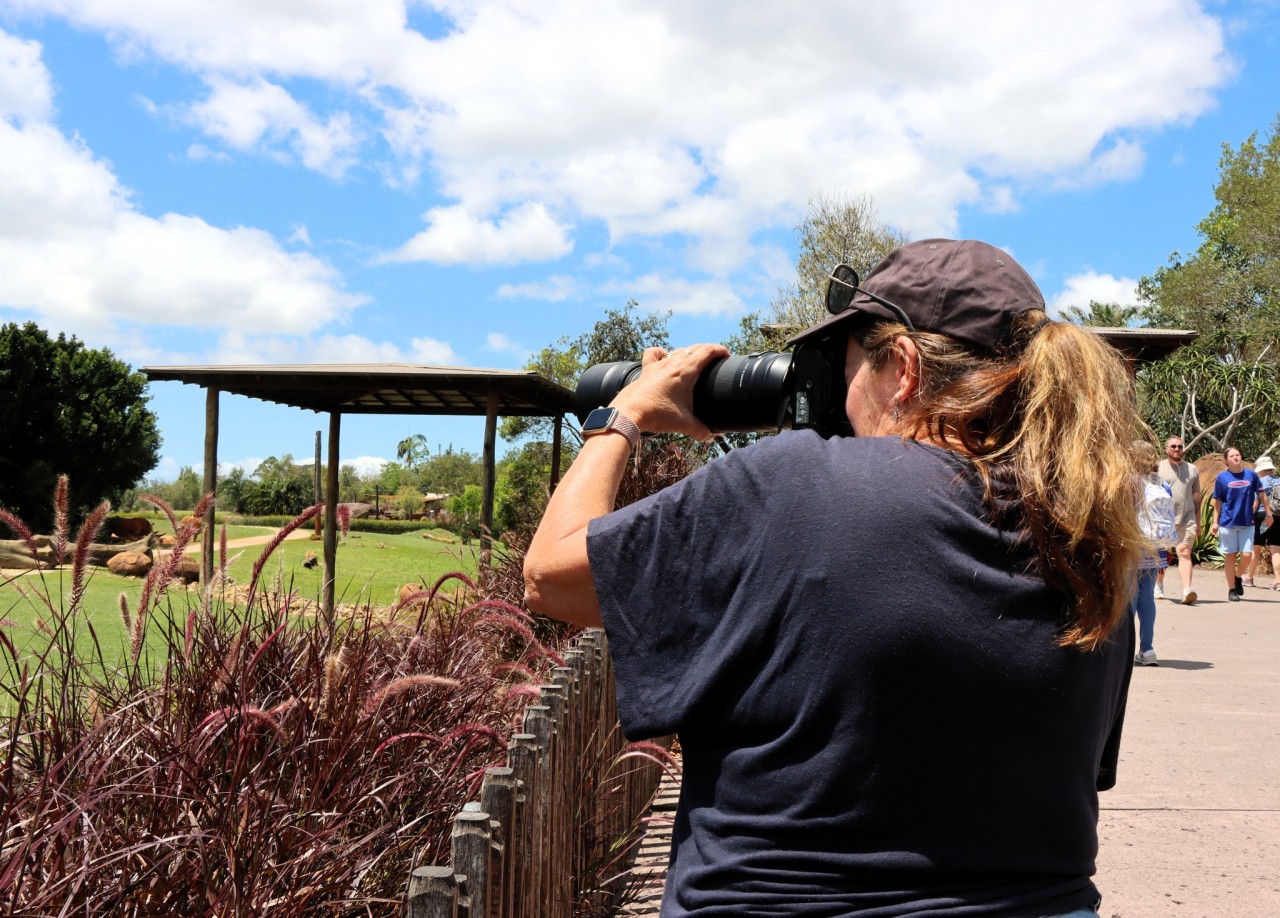
One of the things that really interested me was watching the artists photograph their sitters.
They weren't simply taking a quick photo because they couldn't paint from life.
They were creating their reference.
They would approach the sitter and look at them from different angles. They might ask them to turn their head, move their hands or change their position. They were searching for something that interested them.
And I think this relates so closely to what we do as wildlife artists.
Obviously, we don't have quite the same control over our models.
I'd love to walk up to a tiger and say, “Could you just turn your head a little to the left? Lovely. Now look towards the light…”
Probably not going to happen.
Instead, we might spend hours photographing animals and come home with hundreds — sometimes thousands — of photographs.
But we're doing much the same thing.
We're looking for that moment when the animal turns its head, the light catches its eye, the body creates an interesting shape or we see an expression that makes us stop and think:
There's a painting in that.
This is why I encourage artists to take their own reference photographs whenever possible.
Your artistic decisions can begin long before you pick up a pencil or pastel.
You're already choosing what interests you.
Do professional artists really use grids?
Apparently, yes!
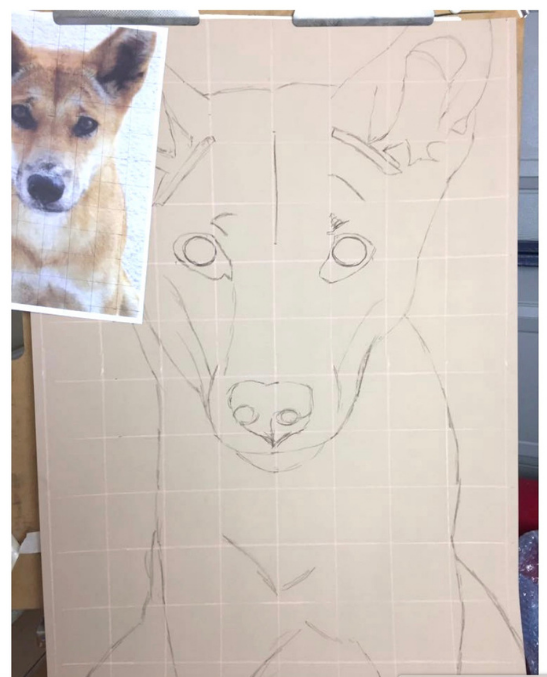
Another thing I loved about watching the show was seeing professional artists using grids, measuring, digital screens and all sorts of methods to establish their drawing.
There didn't seem to be this feeling of:
“Well, I'm a professional artist, so obviously I should be able to draw this perfectly freehand.”
They simply wanted to get the proportions right.
This is something I've talked about many times because I think developing artists can get caught up in the idea that using a grid, tracing an outline or transferring a drawing is somehow cheating.
It's not.
Artists have been finding ways to accurately transfer images and drawings for hundreds of years. The Old Masters used grids, cartoons, pouncing and other methods long before we had phones, projectors and iPads.
The technology has changed.
The problem we're trying to solve hasn't.
We have an image or an idea and we need to get it onto our surface accurately.
And I have a sneaking suspicion that if Michelangelo had been given an iPad, he probably wouldn't have handed it back because it was cheating.
He'd have downloaded Procreate.
The initial drawing is your scaffolding
This also reinforced something I strongly believe when it comes to realistic art:
Getting that initial drawing right is incredibly important.
You can create the most beautifully rendered fur in the world, but if the animal's eyes are in the wrong position, the muzzle is too long or the skull is the wrong shape, something is always going to feel wrong.
The temptation then is to keep adding more detail.
More layers.
More fur.
More pencils.
More everything.
But beautiful rendering can't fix incorrect structure.
I think of that first drawing almost like scaffolding.
When you look at a finished building, nobody asks whether scaffolding was used to build it.
Of course it was.
It was simply a tool that helped create the finished result.
The same applies to our artwork.
Grid it.
Measure it.
Trace it.
Transfer it.
Freehand it.
Squiggle it.
Use whichever method helps you create the foundation you need.
Because once that foundation is there, that's when the really interesting artistic decisions begin.
And then there were the pastels!
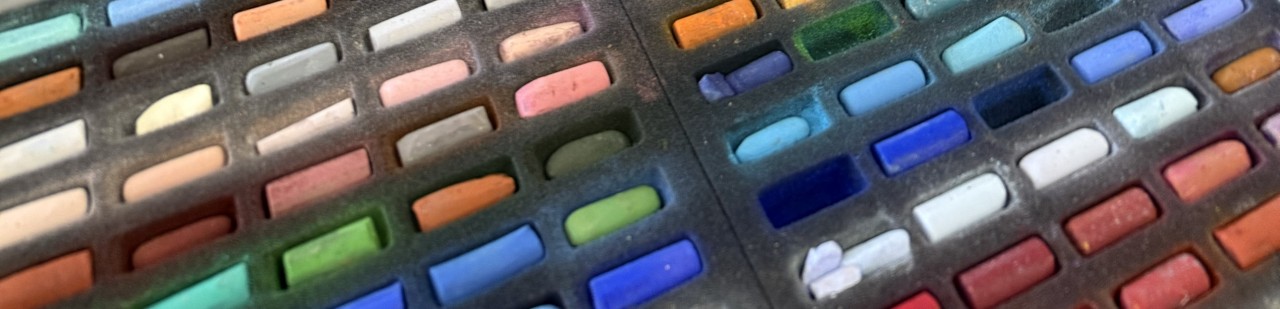
Of course, I've also been particularly interested in the pastel artists appearing on the show.
There have actually been quite a few, which I love seeing.
And even within pastel, everyone seems to be doing something completely different.
Some artists are using pastel sticks quite traditionally, creating broad marks and layers of colour.
Others are combining pastel with different media.
One artist created a portrait predominantly with pastel pencils in a way that felt very familiar to me — building up the detail and working quite realistically.
And then there was an artist who built their portrait using all these little squiggly lines.
At first, you're looking at what seems like a collection of marks.
Then gradually those marks build upon one another until suddenly there's a portrait staring back at you.
It was amazing.
And again, it made me think:
There isn't even one correct way to use the same medium.
Your materials don't determine your style
This is something worth remembering when we're thinking about finding our own artistic style.
A pastel pencil doesn't know what you're going to do with it.
You can use it to create incredibly smooth skin.
You can draw individual hairs.
You can scribble with it.
You can layer it.
You can leave obvious marks.
You can blend everything until you can barely see a mark at all.
You can combine it with pastel sticks, watercolour, charcoal or something else entirely.
The material isn't your style.
The decisions you make with it become part of your style.
And perhaps that's why experimenting is so important.
Instead of always asking:
What colour did that artist use?
or
Which pencil do I need?
sometimes we could ask:
What happens if I use this differently?
What happens if I don't blend this section?
What if I leave some of those stick marks showing?
What if I work loosely through most of the painting and only add detail around my focal point?
What if I use broken marks instead of drawing every individual hair?
What if I combine media I've never used together before?
That's where things start getting interesting.
Maybe we need to stop worrying about the “proper” way
Watching Portrait Artist of the Year has reminded me just how many imaginary rules we artists can create for ourselves.
Real artists should be able to draw freehand.
Real artists work from life.
Tracing is cheating.
You shouldn't need a reference photograph.
Pastel sticks are more artistic than pastel pencils.
But then you watch a room full of accomplished artists and they're taking photographs, looking at phones, gridding canvases, measuring, scribbling, mixing media and basically doing whatever they need to do to create their artwork.
So perhaps instead of asking:
“Am I doing this the proper way?”
we should ask:
“Is this helping me create the artwork I want to create?”
That's a much more useful question.
Try it yourself
Here's a little challenge.
Choose one reference photograph and try drawing it three different ways.
First, freehand it.
Then use a grid.
Then try starting with really loose shapes, scribbles and squiggles to find the proportions without worrying about creating a neat outline.
You don't need to finish any of them.
The exercise isn't about producing three beautiful drawings.
It's about noticing what happens.
Which method makes you really look?
Which gives you the most accurate result?
Which feels easiest?
Which feels uncomfortable?
And, most importantly, which one do you enjoy?
You might discover a completely different way of working.
Or you might simply confirm that the method you're already using suits you perfectly.
Either result is worthwhile.
Because there are already enough difficult things to learn when you're making art without inventing extra rules for yourself.
Use the tools available to you.
Get your foundations right.
Experiment with your materials.
And then put your energy into the part that no grid, photograph, iPad or tracing can do for you:
Making the artwork your own.
Kerri xx